"The Five Wounds of the Liturgical Mystical Body of Christ"

"The Five Wounds of the Liturgical Mystical Body of Christ"
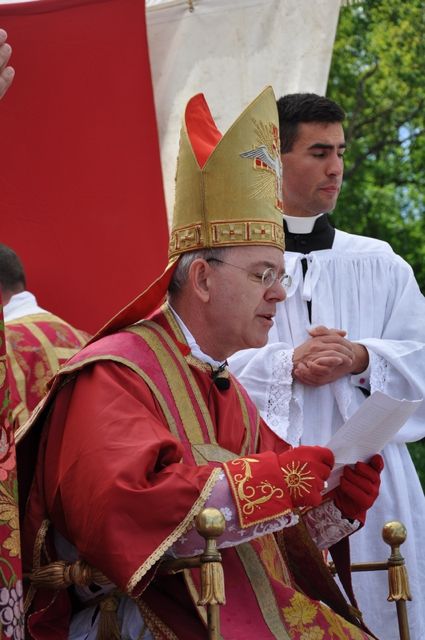
"The Five Wounds of the Liturgical Mystical Body of Christ" according to Bishop Athanasius Schneider: 1. Mass versus populum. 2. Communion in the hand. 3. The Novus Ordo Offertory prayers. 4. Disappearance of Latin in the Ordinary Form. 5. Liturgical services of lector and acolyte by women and ministers in lay clothing.

Thursday, June 11, 2015

This Thy Incomprehensible Fire of Love


Acts of Devotion in Honor of the Sacred Heart of Jesus

Suitable for a Novena in honor of the Holy Eucharist (e.g., for the feast of Corpus Christi or in honor of the Sacred Heart of Jesus).

1. The Word was made Flesh and dwelt amongst us.

Eternal Word, made Man for love of us, humbly kneeling at Thy feet we adore Thee with the deepest veneration of our souls; and in order that we may repair our ingratitude for this great benefit of Thy incarnation, we unite ourselves to the hearts of all those who love Thee, and together with them we offer Thee our humble, loving thanksgiving. Pierced by the excess of humility, goodness, and sweetness which we behold in Thy divine Heart, we beseech Thee to give us Thy grace, that in our lives we, too, may imitate these virtues so dear to The.

Our Father, Hail Mary, Glory be to the Father.

2. He was crucified also for us; suffered under Pontius Pilate, and was buried.

Jesus, our loving Saviour, kneeling humbly at Thy feet we adore Thee With the deepest veneration of our souls; and, in order that we may give Thee proof of the sorrow we feel at our insensibility to the outrages and sufferings which Thy loving Heart made Thee undergo for our salvation in Thy painful Passion and death, we  here unite ourselves with the hearts of all those who love Thee, and together with them we give thanks unto Thee with our whole soul. We wonder at the boundless patience and generosity of Thy divine Heart; and we entreat Thee to fill our hearts with such a spirit of Christian penance as may enable us courageously to embrace suffering, and to make Thy cross our great comfort and all our glory.


Our Father, Hail Mary, Glory be to the Father.

3. Thou didst give them Bread from heaven to eat, containing in itself all sweetness.

Jesus, Who dost burn with love for us, humbly kneeling at Thy feet we adore Thee with the deepest veneration of our souls; and, in order to make Thee reparation for the outrages which Thy divine Heart daily receives in the Most Holy Sacrament of the Altar, we unite ourselves with the hearts of all those who love Thee, and give Thee tenderest thanks. We love in Thy divine Heart this Thy incomprehensible fire of love toward thy Eternal Father, and we entreat Thee to inflame our hearts with ardent charity toward Thee and toward our neighbor.

Our Father, Hail Mary, Glory be to the Father.

Lastly, O most loving Jesus, we pray Thee, by the sweetness of Thy divine Heart, convert the sinner, console the afflicted, help the dying, lighten the pains of the souls in purgatory. Make all our hearts one in the bonds of true peace and charity, deliver us from sudden and unforeseen death, and grant us a death holy and peaceful. Amen.

EJACULATION

V. Heart of Jesus burning with love of us
R. Inflame our hearts with love of Thee.

Let us pray

Grant, we beseech Thee, almighty God, that we who glory in the most sacred Heart of Thy well-beloved Son, and call to mind the chief benefits of His heavenly charity toward us, may be gladdened by the operation and the fruit of those graces in our souls. Through the same Christ, etc.

O divine Heart of my Jesus! I adore Thee with all the powers of my soul; I consecrate them to Thee forever, together with all my thoughts, my words, my works, and my whole self. I purpose to offer to Thee, as far as I am able, acts of adoration, love, and glory, like unto those which Thou dost offer to Thine eternal Father. I beseech Thee, be Thou the reparation for my transgressions, the protector of my life, my refuge and asylum in the hour of my death. By Thy sighs, and by that sea of bitterness in which Thou wast immersed for me throughout the whole course of Thy mortal life, grant me true contrition for my sins, contempt of earthly things, an ardent longing for the glory of heaven, trust in Thy infinite merits, and final perseverance in Thy grace.

Heart of Jesus, all love! I offer Thee these humble prayers for myself, and for all who unite with me in spirit to adore Thee; vouchsafe, of Thy infinite goodness, to receive and to answer them, and especially for that one of us who shall first end this mortal life. Sweet Heart of my Saviour, pour down upon him, in the agony of death, Thine inward consolation;s place him in Thy sacred wounds; cleanse him from every stain in that furnace of love, that so Thou mayest open to him speedily the entrance into Thy glory, there to intercede with Thee for all those who yet tarry in their land of exile.

Most holy Heart of my most loving Jesus, I purpose to renew these acts of adoration and these prayers for myself, miserable sinner that I am, as well as for all who are associated with me to adore Thee, every moment while I live, down to the last instant of my life. I recommend to Thee, my Jesus, the holy Church, Thy well-beloved Spouse, our own true Mother, the souls that undergo Thy justice, all poor sinners, those who are in affliction, the dying, and all mankind - let not Thy blood be shed in vain for them; and, last of all, vouchsafe to receive my poor prayers for the relief of the souls in purgatory, and, above all, for those who in the course of their life were wont devoutly to adore Thee.

Most loving heart of Mary, which, among the hearts of all creatures of God, art at once the most pure, most inflamed with love for Jesus, and most compassionate toward us poor sinners, gain for us from the Heart of Jesus our Redeemer all the graces which we ask of thee. Mother of mercies, one single throb, one beat of thy heart, all on fire with love toward the Heart of Jesus, offered to Him by thee has power to console us to the full. Only grant us this favor and the Heart of Jesus, out of that filial love it had and will ever have for thee, will not fail to hear and answer us. Amen.

Indulgence of 300 days, once a day. ~ Blessed Pius IX, June 18, 1876. [from the Raccolta]

Tuesday, June 9, 2015

Our God is a Consuming Fire - Hebrews 12.29


For the Octave of Corpus Christi:


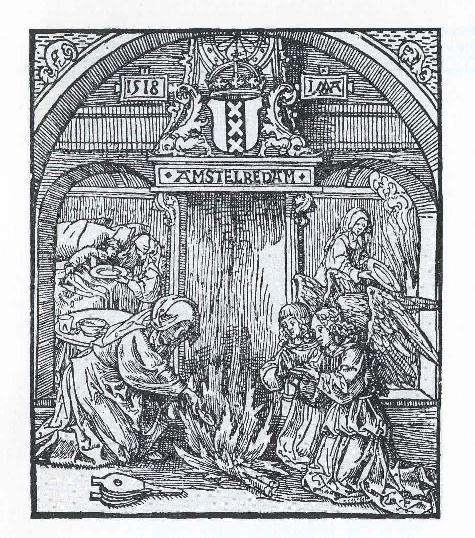
The Miracle of the Eucharist in Amsterdam (1345)
Thrown into a fire, the Eucharist miraculously is not burned

In 1345, Amsterdam was a tiny fishing village consisting of four streets and a few alleys lined up along the main canal. There were small modest fishermen's huts, a church, and a monastery. The monastery was the largest building in the city. The Eucharistic Miracle given to this tiny village on March 13, 1345, was the beginning of the growth for which Amsterdam is now famous. In fact, on the 600th anniversary of the miracle, March 13, 1945, the Dutch Catholics attributed all the growth and progress of their city to the Eucharistic Miracle which we will now present.


The Eucharistic miracle occurred in a house on Kalverstreet where a fisherman named Ysbrant Dommer on his deathbed called for a priest to come to his home to give him the last rites of the Church and Holy Communion. After having heard the man's confession, the priest blessed him with the oils of Extreme Unction, and gave him Communion.

The priest had no sooner left than the sick man began coughing violently. His wife ran over to him in an effort to help him, but the husband, gagging and choking beyond control, vomited the contents of his stomach, including the Host, still intact. The wife reacted instinctively. She swept up the Host and threw It into the fireplace. She soon realized her grave mistake, but the fire was raging, and she was not about to put her hands into it for fear of burning herself. That night she slept fitfully, tossing and turning. She was afraid she had committed a terrible sin and had nightmares about the Sacred Host that she had thrown into the fire.

The following morning, as soon as she got out of bed, she went over to the fireplace. The fire was not extinguished yet, and the coals were still quite hot. She stoked the coals, looking for the Eucharist. To her amazement she suddenly saw the Host sitting atop a burning ember. It was not burned at all. It had not even turned color. The Host was fresh and brilliant, lying among the coals. She immediately snatched the Host from the fire, and carefully wrapped it in a clean linen cloth, and placed it in a chest for safekeeping.

She then called the priest who had been to her house the previous night and told him the story. The priest then placed the Host into a pyx and washed the cloth in which it had been wrapped. He then carried the Host to the parish church of St. Nicholas. The priest thought it best not to tell anyone about the incident, so as not to stir up gossip involving the woman or her husband. He took the Host, wrapped in the cloth, and returned It to the church, where he placed It in the tabernacle.

The following morning, the priest found the pyx empty to his amazement, but the Host was soon discovered by the same woman when she opened the chest to remove some linens. She was stunned and confused as she knew the priest had taken It away the day before. Had she committed such a terrible sin, that the Lord brought back the proof to punish her with the sight of It? She ran to the Church, and explained what had happened to the priest. Again the priest placed the Eucharist into a pyx and returned it to the church. Then, after yet another disappearance and discovery, the priest contacted other members of the clergy for consultation. All agreed that the occurrences were a direct proof of God's intercession, and apparently a sign that the miracle should be openly honored. Jesus wanted to use this miracle to awaken His sleeping people. The Miraculous Host was a light which was to shine all over Europe.


The priest told his fellow friars about the miracle, and the story of which soon spread about the town and the surrounding countryside. When the priest formed a procession to go to the fisherman's house for the Sacred Host, a huge crowd followed him and his fellow priests. They carried the Sacred Host back to the church of St. Nicholas affording Our Lord the honor He deserved for giving such a rich gift to these humble people.

Another wonderful element to the story is that the fisherman who had been dying, the one whom the priest brought the Eucharist on that first night, didn't die. To the contrary, he recovered, thanks be to God. However, when word of the miracle reached the ears of the townspeople, and those from other villages, they all went to the fisherman's house to see where the miracle had taken place. It soon became sort of a shrine, and soon afterwards, a Chapel.

Official inquiries were made by the civil magistrate and also the city council, and upon investigation all were satisfied with the truthfulness of the witnesses. They affirmed the occurrence as fact and also endorsed the miracle in official City documents. The Church authorities, too, headed by the Bishop of Utrecht, held an extended inquiry before permitting the clergy to spread information about the event.

In a Pastoral letter, the Bishop officially declared that an authentic miracle had occurred in the little town of Amsterdam. In the same pastoral letter, he authorized veneration of the Eucharistic Miracle of the Host. The little house of the fisherman was soon converted into a Chapel, called Nieuwe Zijds, or Holy Place and the Miraculous Host was placed upon the main altar, for the adoration of the people. The fireplace of the fisherman's hut was kept intact, and became a permanent part of the new shrine.

Miracle upon Miracle
The second miracle of 1452

A second miracle took place 100 years later. Amsterdam had grown considerably in the century since the first miracle had taken place. On May 24, 1452 the entire city of Amsterdam was engulfed in fire. Most of the buildings were destroyed by the blaze. When the Chapel of the Blessed Sacrament (the former fisherman's hut) caught fire, some of the parishioners made an attempt to save the Miraculous Host from destruction by the flames. They tried to force open the tabernacle. The Host had been placed in a beautiful monstrance, which was inside the tabernacle. The heat of the Church was becoming unbearable. The workers worked feverishly, but to no avail. The heat of the fire had made it impossible to get the door open. As the roof of the Chapel began to cave in, the men ran out of the Church to safety, their mission a failure.

The entire Church collapsed and burned to the ground, including the tabernacle. Upon seeing this, there was a great sadness among the faithful of the city, especially those who had tried in vain to rescue the Eucharistic Miracle. The next day, they sifted through the ashes of the Church, hoping against hope, that something remained of their precious Host. Their grief turned to joy as soon they spotted the Monstrance, completely unscathed, there among the ashes of the Church. Even the silk veil which covered the Monstrance had been saved from the fire. So, once again the Lord saved the same Host from fire in the same house in Amsterdam.


Soon afterwards, a new chapel was built, more elaborate and more beautiful than the previous one. The fame of the Eucharistic Miracle of Amsterdam, now recognized as a twofold miracle, spread beyond the Netherlands to all of Europe. The Hapsburg Emperor of the Holy Roman Empire, Maxmillian, went to Amsterdam in pilgrimage to the Eucharistic Miracle. He prayed for a healing at the shrine, which was granted to him because of his faith. He showed his thanksgiving by donating beautiful gifts to the Chapel of the miracle. Amsterdam and the Eucharistic Miracle became a major place of pilgrimages and processions.

See more at: Miracles of the Church

Saturday, June 6, 2015

Excerpts from the Sermon from Pentecost during the 2015 Chartres Pilgrimage


  his grace Athanasius Schneider, Auxiliary Bishop of the Archdiocese of Saint Mary in Astana, Kazakhstan


The family must rise to the peril, he urged, defending not only itself but Christianity: “It is today that the family is called to witness to the Divine beauty of its essence and of its vocation.” First, the Catholic family must gather together in prayer daily “to implore God’s blessing, and to honour the Immaculate Virgin by a rosary in praise of her, for all those who will go to sleep under the same roof.”
But the family must do more, he said, than strengthen its own members in their struggle against sin and “neo paganism.” It must raise up more priests and sisters.  “The most urgent necessity of our times is to have authentically Catholic families, which become the first seminaries for priestly and religious vocations.”
But it must also raise up young men and women in purity and fortitude to form new families and carry on the Faith. "What a beautiful vocation it is to be a true Catholic! What a beautiful vocation to fight for the integrity of the Faith, and the commandments of God! What a beautiful vocation it is to be a Catholic family, a domestic Church! What a beautiful vocation it is to be a chaste young man, or a chaste young woman! What a beautiful vocation it is to be a seminarian and a priest with a pure and ardent heart!”


Friday, June 5, 2015


Devotion to the most Sacred Heart of Jesus is most dear to me. It is through this devotion that I came to know Christ personally as a young boy before my first holy communion. I grew up observing the nine first Fridays in honor of the Sacred Heart of Jesus.  Like so many others, I had known about God and had learned my prayers but I never had as of yet experienced God in a personal way. I was taught that God created me in His image and likeness and that He loved me but it was an intellectual knowledge rather than one of the heart. This is to me what sets Christianity as a revelation apart from other religions: God has revealed Himself to us in Christ Jesus who St Paul in his letter to the Hebrews says, "Who being the brightness of his glory, and the figure of his substance, and upholding all things by the word of his power, making purgation of sins, sitteth on the right hand of the majesty on high"

We believe that Jesus is God incarnate. Upon being asked by Philip to be shown God the Father,  "Jesus saith to him: Have I been so long a time with you; and have you not known me? Philip, he that seeth me seeth the Father also. How sayest thou, Shew us the Father? " John 14:9   Often Protestants will speak of when they "came to Christ" and this can be puzzling for a Catholic. However, all who bear the name Christian must answer the call of the Heart of Jesus:  "28Come to me, all you that labour, and are burdened, and I will refresh you. 29Take up my yoke upon you, and learn of me, because I am meek, and humble of heart: and you shall find rest to your souls. 30For my yoke is sweet and my burden light." MT 11:28-30

 We must all strive to grow in a deep relationship with the Heart of Jesus apart from an intellectual knowledge of Him as the second person in the Blessed Trinity.  How can we love someone we do not know? For the Heart of Jesus knows us thoroughly, He knows our sins, our weaknesses, our faults, our hopes, our dreams, our longings, our aspirations. He knows what we are capable of if we abide in Him. Just as He knows to what depths we plummet when left to our own devices. Yet, in spite of it all He continues to love us. It was when I realized that the Heart of Jesus loved me despite my wretchedness that He became my hope of ever transcending that same abyss of wretchedness through His grace. "38For I am sure that neither death, nor life, nor angels, nor principalities, nor powers, nor things present, nor things to come, nor might, 39Nor height, nor depth, nor any other creature, shall be able to separate us from the love of God, which is in Christ Jesus our Lord." Romans 8:38-39

By frequent visits I come closer to that wonderful union with God which He desires to grant me in my daily life. Each visit can bring me nearer to Him in true friendship.  I need no special formula, no particular prayers, no unusual requirements. All that I need is to present myself before Him, talking if I so wish, listening if I am so disposed, or simply staying with Him.  He is more interested in me than anyone else.  Though I may feel very dull, He is interested in my thoughts, my desires, my needs, hopes, ambitions, efforts, and labors.  My daily life is a matter of the highest importance to Him.   He is glad to see me come because each visit gives Him another excuse to grant me more blessings.  He is there for love of me.  I ought to visit Him often for love of Him.


O sacred heart of Jesus, I place my trust in thee,
Whatever may befall me, Lord, though dark the hour may be;
In all my woes, in all my joys, though nought but grief I see,
O sacred heart of Jesus, I place my trust in thee.
When those I loved have passed away, and I am sore distressed,
O sacred heart of Jesus, I fly to thee for rest.
In all my trials, great or small, my confidence shall be
Unshaken as I cry, dear Lord, I place my trust in thee.
This is my one sweet prayer, dear Lord, my faith, my trust, my love,
But most of all in that last hour, when death points up above,
O sweet savior, may thy face smile on my soul all free.
Oh may I cry with rapturous love, I've placed my trust in thee.


 How do we get to know the Heart of Jesus? Firstly, by meditating upon the gospels and engraving them upon our own hearts. Secondly, by conversing with Him often. How can we come to know our dearest friend if we do not converse with Him? I was taught as a young boy to often make visits to Jesus in the tabernacle. If we haven't access to a Church, we can nevertheless converse with Him in sweet discourse at work, in our home or anywhere we happen to find ourselves. We can rest assured that He is the one friend who will never reject us. We can share all of our troubles and concerns with Him. Unlike our family and friends,  He never tires nor becomes weary by our neediness. We can trust Him in his promises. He will never forsake us: "for he hath said: I will not leave thee, neither will I forsake thee."  Hebrews 13:5  when all others leave or forsake us be they family or friends the Heart of Jesus remains with us for He says, "behold, I am with you always, to the end of the age.” Matthew 28:20.  if we but cleave to Him, " Abide in me, and I in you. As the branch cannot bear fruit of itself, unless it abide in the vine, so neither can you, unless you abide in me." John 15:4

Prayer of Confidence of Saint Claude De La Colombiere


My God, I believe most firmly that Thou watchest over all who hope in Thee, and that we can want for nothing when we rely upon Thee in all things; therefore I am resolved for the future to have no anxieties, and to cast all my cares upon Thee.
People may deprive me of worldly goods and of honors; sickness may take from me my strength and the means of serving Thee; I may even lose Thy grace by sin; but my trust shall never leave me. I will preserve it to the last moment of my life, and the powers of hell shall seek in vain to wrestle it from me.
Let others seek happiness in their wealth, in their talents; let them trust to the purity of their lives, the severity of their mortifications, to the number of their good works, the fervor of their prayers; as for me, O my God, in my very confidence lies all my hope. “For Thou, O Lord, singularly has settled me in hope.” This confidence can never be in vain. “No one has hoped in the Lord and has been confounded.”
I am assured, therefore, of my eternal happiness, for I firmly hope for it, and all my hope is in Thee. “In Thee, O Lord, I have hoped; let me never be confounded.”
I know, alas! I know but too well that I am frail and changeable; I know the power of temptation against the strongest virtue. I have seen stars fall from heaven, and pillars of firmament totter; but these things alarm me not. While I hope in Thee I am sheltered from all misfortune, and I am sure that my trust shall endure, for I rely upon Thee to sustain this unfailing hope.
Finally, I know that my confidence cannot exceed Thy bounty, and that I shall never receive less than I have hoped for from Thee. Therefore I hope that Thou wilt sustain me against my evil inclinations; that Thou wilt protect me against the most furious assults of the evil one, and that Thou wilt cause my weakness to triumph over my most powerful enemies. I hope that Thou wilt never cease to love me, and that I shall love Thee unceasingly. “In Thee, O Lord, have I hoped; let me never be confounded.”
Amen


Thursday, June 4, 2015

My Jesus, you are my true friend, my only friend

                                                                
 Saint Claude La Colombière        

My Jesus, you are my true friend,
my only friend,
you take part in all my misfortunes;
you know how to change them into blessings.

You listen to me
With the greatest kindness
When I tell you all my troubles
And you always have something
With which to heal my wounds.

I find you at any time of the day or night
For I find you wherever I happen to be
You never leave me;

If I change my dwelling place
I find you wherever I go
You never weary of listening to me;
You are never tired of doing me good.
I am certain of being loved by you,
If I but love you.
My worldly goods are of no value to you
But by bestowing yours on me
You never grow poorer.
However miserable I may be,
No one more noble or cleverer or even holier
Can come between you and me
And deprive me of your friendship;
And death,
Which tears us away from all other friends,
Will unite me forever to you.
All the humiliations attached to old age
Or the loss of honour
Will never detach you from me;
On the contrary
I shall never enjoy you more fully
And you will never be closer to me,
Than when everything seems to conspire
Against me to overwhelm me,
And cast me down.
You bear with all my faults
With extreme patience,
And even my want of fidelity
And my ingratitude
Do not wound you to such a degree
As to make you unwilling to receive me back
When I return to you.
O Jesus,
Grant that I may die loving you,
That I may die for the love of you. 

AMEN

Monday, May 25, 2015

The Octave of Pentecost: A Proposal for Mutual Enrichment


From the New Liturgical Movement- a brief synthesis on the changes to the Roman Calendar and a call to restore the sacred Patrimony of these observances.

The Octave of Pentecost: A Proposal for Mutual Enrichment

by Gregory DiPippo
This week is one of the liturgical seasons where the discrepancies between the two forms of the Roman Rite are most evident; the Extraordinary Form retains the Octave of Pentecost, with its three Ember Days, while the Ordinary Form does not. The presence of such discrepancies is an absolutely anomalous situation in the history of the Roman Rite, and indeed of the whole of Catholic liturgy. This anomaly will be noticed more and more as the number of churches where both forms of the Rite are routinely celebrated grows; to invent an example, the clergy and faithful will more regularly see in the same parish a 9 a.m. Sunday Mass in green for the Fifth Sunday in Ordinary Time, and the 10:30 Mass in violet for Sexagesima. Such a thing was unknown before 1969, and was extremely rare before the 1988 motu proprio Ecclesia Dei.
The Proper of the Seasons (‘Proprium de Tempore’ or ‘Temporale’ in Latin) is built around the most ancient and important features of the Christian year, the shorter cycle of Advent, Christmas and Epiphany, and the longer cycle of Lent, Easter, Ascension and Pentecost. Over the centuries, the Church enriched the two cycles with many additions, such as the Ember Days and the various octaves and vigils. The Wurtzburg Lectionary, a manuscript of the mid-7th century, and the Murbach Lectionary of roughly a century later attest between them to all of the same seasonal observances from Advent to Pentecost as the Missal of St. Pius V, lacking only the Minor Litanies and the octave of the Ascension. Most of these features are of course quite older than the manuscripts; for example, St. Leo the Great (444-461) preached on the Ember Days, and believed them to be of apostolic origin. Only one feature of the Proper of the Seasons as attested by these early manuscripts has disappeared, the “Pascha annotinum”, which was a commemoration of the previous year’s Easter and the baptismal anniversary of the catechumens.
The Minor Litanies were introduced into the liturgy of Rome in the reign of St. Leo III (795-816), but had been established in Gaul by St. Mamertus of Vienne over three centuries earlier; the octave of the Ascension was added by St. Leo IV in 847. Before the 20th century, only two further additions were made to the Temporale; no further subtractions were made until 1969. The feast of the Holy Trinity was first instituted in the diocese of Liège by Bishop Stephen in the early 10th century, but only quite slowly received throughout the Roman Rite; Pope Alexander II (1061-73) famously remarked that he saw no more need for a feast of the Trinity than for a feast of the Unity. To Liège also belongs the honor of having first celebrated the feast of Corpus Christi, officially promulgated for the universal Church in 1264 by Pope Urban IV. This feast was also slow to be received in some places, but by the 15th century, both of these observances had become universal; the Proper of the Seasons was thus received into the Tridentine reform unaltered, and remained exactly the same for almost four centuries, with one addition. The feast of the Sacred Heart, added to the General Calendar by Bl. Pius IX in 1856, was definitively added to the Proper of the Seasons in 1928 by Pius XI, who clearly wished to underscore the great importance of the feast and devotion by making it the first such addition in nearly 700 years.
It must also be noted that many of the features of the traditional Proper of the Seasons are specifically Roman in origin. The shorter Advent (the Ambrosian Advent and the Byzantine fast of the Nativity both begin in mid-November), the Ember Days, the season of Septuagesima, Passiontide as distinct from Lent (a feature which is more evident in the Office than in the Mass), and the Major Litanies are all originally Roman practices, some of which were adopted by other rites, and some not. The Roman Temporale is in this respect the richest and most developed of all of the western rites.
As the Roman Rite was adopted in western Europe and beyond in the early Middle Ages, the Proper of the Seasons was taken on as part of it with almost perfect uniformity, although there was no central liturgical authority to compel the individual churches to receive it in toto. The various features of it remained common to all of the Roman Rite’s usages and variants until 1969; thus, the first Sunday of Advent, for example, was the first Sunday of Advent every year in every church which followed the Roman Rite anywhere in the world. (Small differences from the Roman practice do occur before Trent, but they are minor and rare; after Trent, they are unheard of.)
The Second Vatican Council’s decree on the liturgy Sacrosanctum Concilium nowhere suggests that the Temporale should be altered, or that any feature of it should be suppressed. Indeed, article 107 of the same constitution clearly presumes that it will not be changed: “The liturgical year is to be revised so that the traditional customs and discipline of the sacred seasons shall be preserved or restored to suit the conditions of modern times.” This statement is in perfect harmony with the mind of the great scholars of the Liturgical Movement such as Dom Guéranger, Fr. Fortescue and Bl. Ildefonse Schuster, who wished for traditional observances such as the Ember Days to be more deeply inculcated into the spiritual lives of the faithful, as an intrinsic part of the Church’s liturgical patrimony.
Despite what the Council says on the subject, the Proper of the Seasons was notably altered in the Novus Ordo. The four sets of Ember Days, Septuagesima, the Major and Minor Litanies and the octave of Pentecost were all suppressed; Passiontide was effectively subsumed into Lent. Even before the Council, the 1955 simplification of the rubrics suppressed four octaves of the temporal cycle (Epiphany, Ascension, Corpus Christ and the very late Sacred Heart) and one vigil (Epiphany); the vigil of Pentecost was deprived of its very ancient baptismal character in the Holy Week reform of the same year.
One of the best possible examples of the mutual enrichment of the two forms which the Holy Father spoke of in Summorum Pontificum would be restoration to the post-Conciliar liturgy of at least some of the major features which were eliminated from the Proper of the Seasons; most prominent among them would be the octave of Pentecost, the suppression of which famously brought Pope Paul VI to tears. Likewise, it is very difficult to see what was gained by the removal of Septuagesima, the loss of Passiontide, and the shortening of the Triduum. The traditional rite’s more gradual approach to the Passion and Resurrection impresses their importance upon us more effectively, as Pope Paul noted when he compared the four stages of preparation for Easter to the “bells calling people to Sunday Mass. The ringing of them an hour, half-hour, fifteen, and five minutes before the time of Mass has a psychological effect and prepares the faithful materially and spiritually for the celebration of the liturgy.”
Likewise, it would an excellent idea not only to restore the fast days of the traditional rite such as the Ember Days to the Novus Ordo, but also to restore at least some of the fasts themselves, most of which had been mitigated or abolished long before Vatican II. The constant tradition of the Scriptures, the Fathers and Catholic spiritual writers down to our own age is unanimous on the spiritual benefits of fasting, and we could hardly imagine an age more in need of this particular sign of contradiction. It would be an excellent thing if the recent decision of the English bishops’ conference to restore abstinence from meat on Fridays were imitated throughout the Catholic world; it would be even better if such abstinence was restored to its proper place as part of the Church's liturgical life, as it was in antiquity and remains among Byzantine Christians.
Of course, there are also a very large number of differences between the calendars of Saints’ feasts in the two forms of the Roman Rite, and this seems to be the cause of much debate and angst in some places. The 1962 calendar has far more Saints on it, (some would say too many), and several important feasts were moved from their traditional days in the 1969 Calendar or suppressed. This problem will also come to be noticed more and more in those churches where both forms of the Roman Rite are habitually used, especially when it comes to the feast of a patron Saint, for example. However, the presence of multiple calendars within the Roman Rite is per se much less problematic than having two different Temporalia. The Proper of the Seasons was traditionally a uniformly observed part of the liturgy throughout the Roman Rite, as it is in other rites, but there have always been significant differences in the calendars of Saints’ days from one diocese to another, and even between one major church and another within the same diocese. In 1924, the calendar of St. Peter’s Basilica contained 57 feasts which were not on the General Calendar of the Roman Rite; a great many of these were also not kept in the rest of the diocese of Rome. Prior to the liturgical reform of St. Pius V, August 5th was the feast of the Dedication of St. Mary Major in Rome, the feast of St. Dominic in the Order of Preachers and several dioceses, St. Oswald in England, and the Transfiguration in Liège. This is only one of many examples of such variation in local calendars that could be noted, both before and after the Tridentine Reform.
The question of the calendar of Saints may therefore be regarded as less pressing in terms of future liturgical reform; I would add that there is one particular feature of the post-Conciliar reform which should prove particular useful in resolving it. I think it is generally agreed that the calendar of 1962 is a little over-full, and the calendar of 1969 a little meager. The introduction of the optional memorial in the Ordinary Form resolves the problem very nicely; the calendar can be stuffed as full as you like with Saints, but the keeping of feasts need never prove excessively repetitious. On the other hand, the keeping of Saints’ days as commemorations, which is very common in the Tridentine period, but almost gone from the Novus Ordo, should be re-introduced into the latter to honor those Saints who are not kept with a full feast. This would also restore the integrity of the various liturgical seasons of the Temporale, which in the Ordinary Form are not mentioned at all when a feast occurs.

Thursday, May 21, 2015

Thursday, May 14, 2015

FATIMA IS THE ANSWER!

 Of your charity please pray for the repose of the soul of Father Nicholas Gruner (May 4, 1942 – April 29, 2015) a tireless crusader of Our Lady of Fatima's message. 

"Our Lady of Fatima foretold a coming "diabolical disorientation":

Sister Lucy, the last of the three seers of Fatima, in responding to a militantly orthodox priest states: "There is a diabolical disorientation invading the world and misleading souls! It is necessary to stand up to it; . . . and, staying in my place, I pray for you and for all those who work with you."
Sister Lucy deplores the fact that so many pastors: "let themselves be dominated by the diabolical wave invading the world," and are "blind men leading other blind men."


WHY IS THERE A CONFUSION OF BELIEFS AROUND ME AND WHAT DO I DO AND WHOM DO I BELIEVE? A THREE PART EXPOSITION BY PETER FONGEMIE